
No products in the cart.
Type “Honduras” into a search engine and the results are not reassuring. Type “Roatan” and you get beach photos. Both are real, and the gap between them is exactly what a cruise passenger needs to understand before deciding whether to leave the pier. We have run tours on this island since 2009, right next to the Isla Tropicale cruise terminal, so here is the answer we give our own friends and family.
The short answer
For cruise passengers who do the normal things, yes. Book with a known operator or stay in the port and beach areas, go out in daylight, and leave valuables on the ship. Roatan is a different place from mainland Honduras in geography, economy and daily life, and the areas cruise passengers actually visit are built around tourism. The risks that actually spoil port days here are sunburn, a taxi fare dispute and missing the ship over a time zone mix-up.
Roatan is not the mainland
Roatan is the largest of the Bay Islands, about 40 miles off the north coast of Honduras. It has its own history, shaped by English-speaking settlers from the Cayman Islands and by Garifuna communities, and English is spoken alongside Spanish across the island. The economy runs on diving, cruise tourism and the people who moved here for both.
The headlines about Honduras are mostly about the big mainland cities, San Pedro Sula and Tegucigalpa, which are a flight or a ferry away. As of October 2026 the U.S. State Department rates Honduras as a whole at Level 3, “Reconsider Travel”, and the one area it tells Americans not to visit is Gracias a Dios, the remote far east of the mainland. Earlier versions of the advisory noted that the resort areas of the Bay Islands have more resources and are better policed. Advisories change, so read the current Honduras travel advisory before you sail, all of it, not just the headline level.
What the cruise ports are like
Roatan has two cruise terminals. Both are fenced complexes with controlled access and shops priced in US dollars.
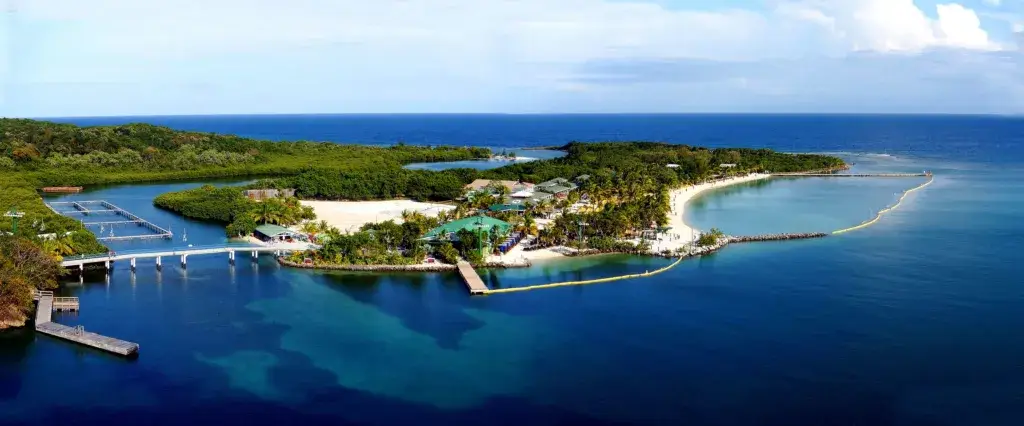
Isla Tropicale (formerly Mahogany Bay) is Carnival’s own terminal, with a beach, a pool area, restaurants and a chairlift inside the gates. You can spend a whole port day without leaving the property, and many nervous first-timers do exactly that. It is a perfectly good day. Our park is a five minute walk from this terminal, across the road from the shopping village.
Port of Roatan at Coxen Hole opens onto the island’s main town. Inside the pier plaza it is the same controlled environment. Outside the gate is a working Honduran town: busy, a little chaotic on ship days, and the place most passengers pass through on the way to the western beaches. In daytime, on the main streets, with the awareness you would use in any city, it is fine. It is not where you wander side streets with a camera around your neck.
Our full comparison of the two is in the Roatan cruise port guide.
The real risks, ranked
These are the things that actually go wrong for cruise passengers on Roatan, roughly in the order we see them.
1. Missing the ship over the time zone
Roatan runs on Central Standard Time (UTC minus 6) all year, with no daylight saving. Many ships keep a different time, so there can be an hour or two between the clock in your pocket and the clock on the island. This is the most common way a Roatan day goes wrong, and it has nothing to do with crime. Know which time your all-aboard is quoted in. All our tour times are Roatan local time, and we time every tour to your ship.
2. Taxi fare disputes
Fares change with demand and are agreed before you get in. Passengers who agree a number and then find it doubled at the destination usually did not confirm whether it was per person or per car. Agree the total, in dollars, before the door closes. Or book a tour that includes the ride and skip the conversation.
3. Sun and dehydration
You are about 16 degrees north of the equator, and beach shade disappears by mid-morning. Heat is the most common reason a fit passenger feels terrible by lunchtime. Water, hat, sunscreen, repeat.
4. Petty theft
Phones left on beach towels, bags left in open taxis, wallets in back pockets in a crowd. It is the same petty theft you would guard against in any Caribbean port. Leave the passport and most of the cash on the ship, and carry a copy and one card.
5. Water safety
The reef is close to shore at West Bay, and the currents outside it can be stronger than they look. Snorkel inside the reef with a buddy. If you are not a confident swimmer, take a guided boat trip rather than going it alone from the beach.
6. Operators you cannot check
The person at the gate with a laminated sheet may be excellent, or may be nobody. The risk is less about safety and more about your day: no fixed return time and equipment you cannot assess. Book in advance with an operator you can look up, read the reviews, and confirm how pickup and drop-off work.
How we run a port day
Xplore Roatan runs ATV, zip line and horseback tours in a 165 acre nature reserve at Isla Tropicale. Guests from the Isla Tropicale terminal walk five minutes to our gate. Guests from Port of Roatan ride our free shuttle, about 15 minutes each way, so there is no taxi to negotiate and no time on the street. Every tour is timed to your ship’s all-aboard. Each group gets a safety briefing and gear at check-in, and our guides lead every tour.
None of that means nothing can go wrong anywhere on the island. It means your port day is planned so that the only surprises are the good kind.
Simple rules for a good port day
- Decide before you dock whether you are staying in the port, going to the beach or doing an activity, and book the activity in advance.
- Write down your all-aboard time in both ship time and Roatan time.
- Carry one card, some small US bills, your phone and a copy of your passport. Leave the rest aboard.
- Agree taxi fares as a total, in dollars, before you get in.
- If you walk out of the Coxen Hole gate, stay on the main streets and go in daylight.
- Drink more water than you want to.
- Be back at the pier well before all-aboard, not at it.
Frequently asked questions
Is Roatan safer than mainland Honduras?
Roatan is an island about 40 miles offshore with an economy built on tourism, and the crime headlines about Honduras are mostly about the large mainland cities. Read the whole current U.S. State Department advisory for Honduras, not just the country-level summary.
Is it safe to leave the cruise port in Roatan?
Yes, in daylight, on the main routes, and especially with a pre-booked tour or an agreed taxi fare. The beach areas at West Bay and West End and the tour operators near the ports are set up for cruise visitors.
Is Roatan safe for American tourists?
Americans are the largest group of visitors to Roatan, and its cruise business is built around them. The practical advice is the same as for anyone: stay in visitor areas, go out in daylight and keep valuables on the ship.
Is Roatan safe at night?
Cruise passengers are usually back aboard before dark, so this rarely applies. For overnight visitors, West End and West Bay are busy in the evening. Coxen Hole is not a place to walk around at night.
Can I drink the tap water in Roatan?
Drink bottled or purified water, as most people on the island do.
Is Roatan safe for families with kids?
Yes. Our tours have tickets for children 12 and under, youths and seniors, and our guides lead every group. For families the main risks on a port day are sun and the time zone.
Planning the rest of the day? See 12 things to do in Roatan from a cruise ship, read what other cruisers say on our reviews page, or book a guided adventure on our Roatan cruise excursions page.